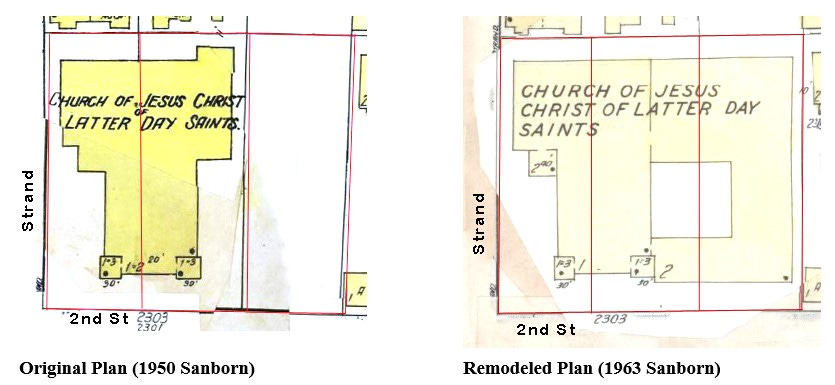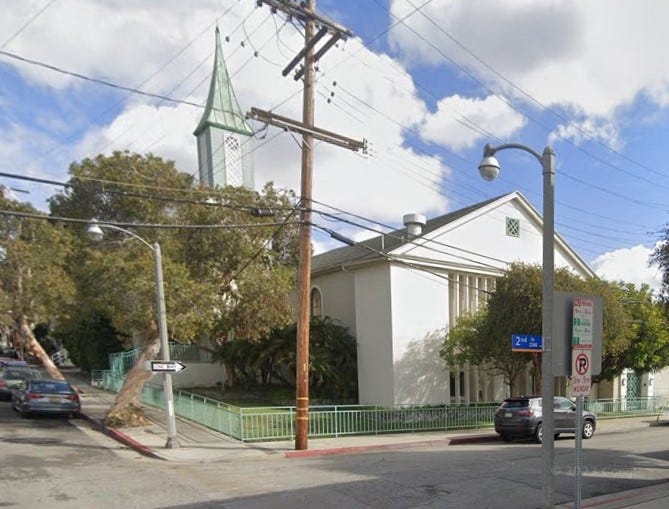
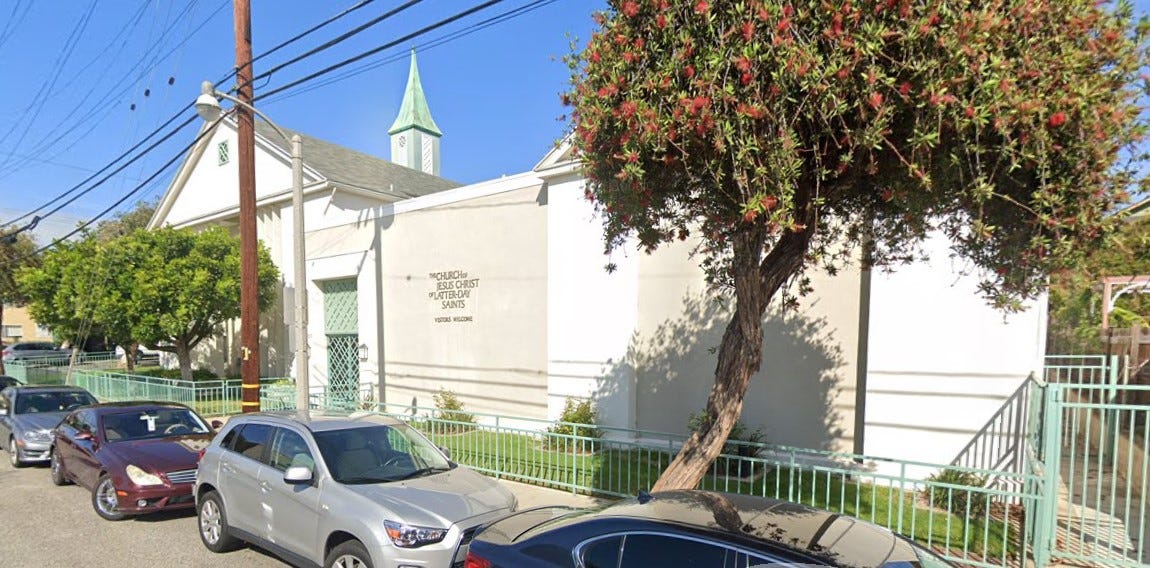
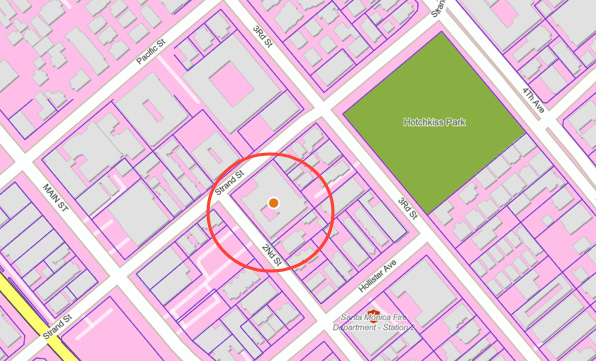
The Ocean Park Chapel of the Church of the Latter Day Saints is built on the southeast corner of 2nd and Strand St in 1922. The building is severely remodeled and extensively expanded in 1961 - 1963.
[1895] LDS in Los Angeles
After the Church of Jesus Christ of Latter Day Saints (LDS) abandons San Bernardino in 1857, LDS Church members begin moving to the Los Angeles area. In 1895, the LDS Los Angeles branch1 is organized and grows to 120 members within a year. The first LDS Church Chapel in Los Angeles (at 153 West Adams Boulevard) is dedicated by LDS Church president Joseph Fielding Smith (1838 – 1918)2 in 1913.
[1920] LDS in Ocean Park
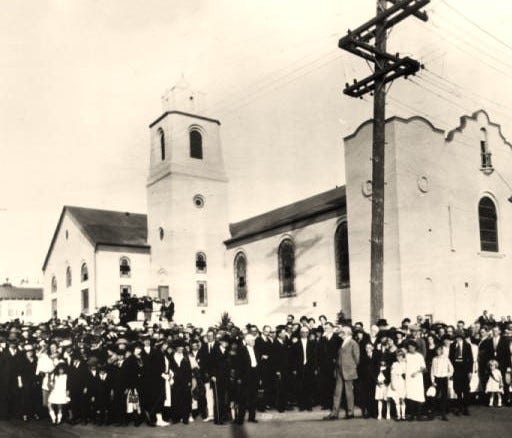
In 1920, Joseph William McMurrin (1858 – 1932), head of the LDS Church in California from 1919 until 1932, organizes the Ocean Park branch (the third LDS branch in Los Angeles County - after Los Angeles branch in 1913 and Long Beach branch in 1919). LDS Church Ocean Park branch members meet at the Ocean Park Masonic Temple on Marine St at Neilson.
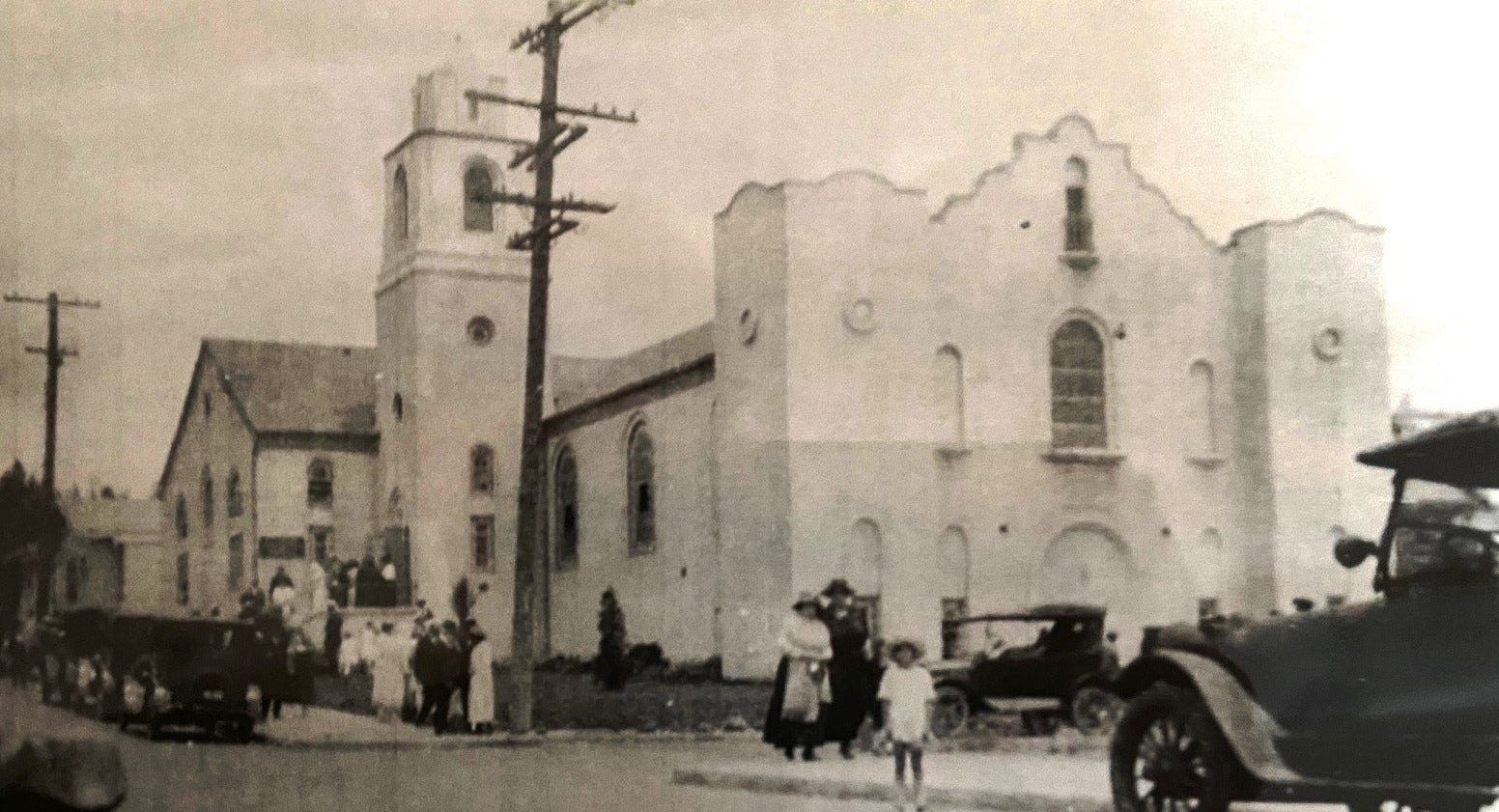
In 1920, the LDS Church purchases a vacant lot3 on the southeast corner of 2nd and Strand4 for $4,000 and begins a fundraising campaign to build a chapel.5
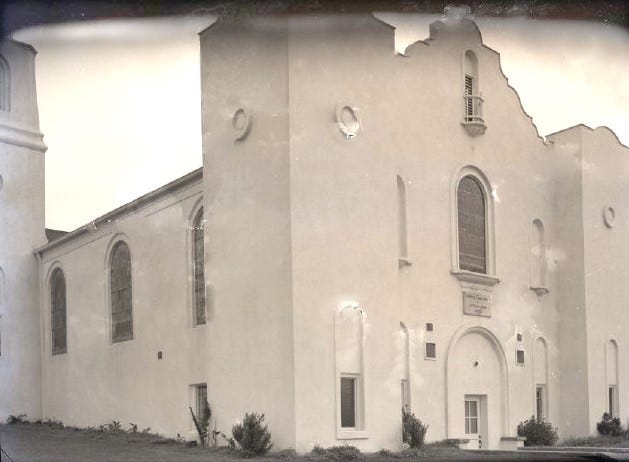
The Ocean Park Chapel is designed by Francis D. Rutherford (1883 – 1933),6 a noted Salt Lake City architect who moves to Los Angeles in the early 1920s.
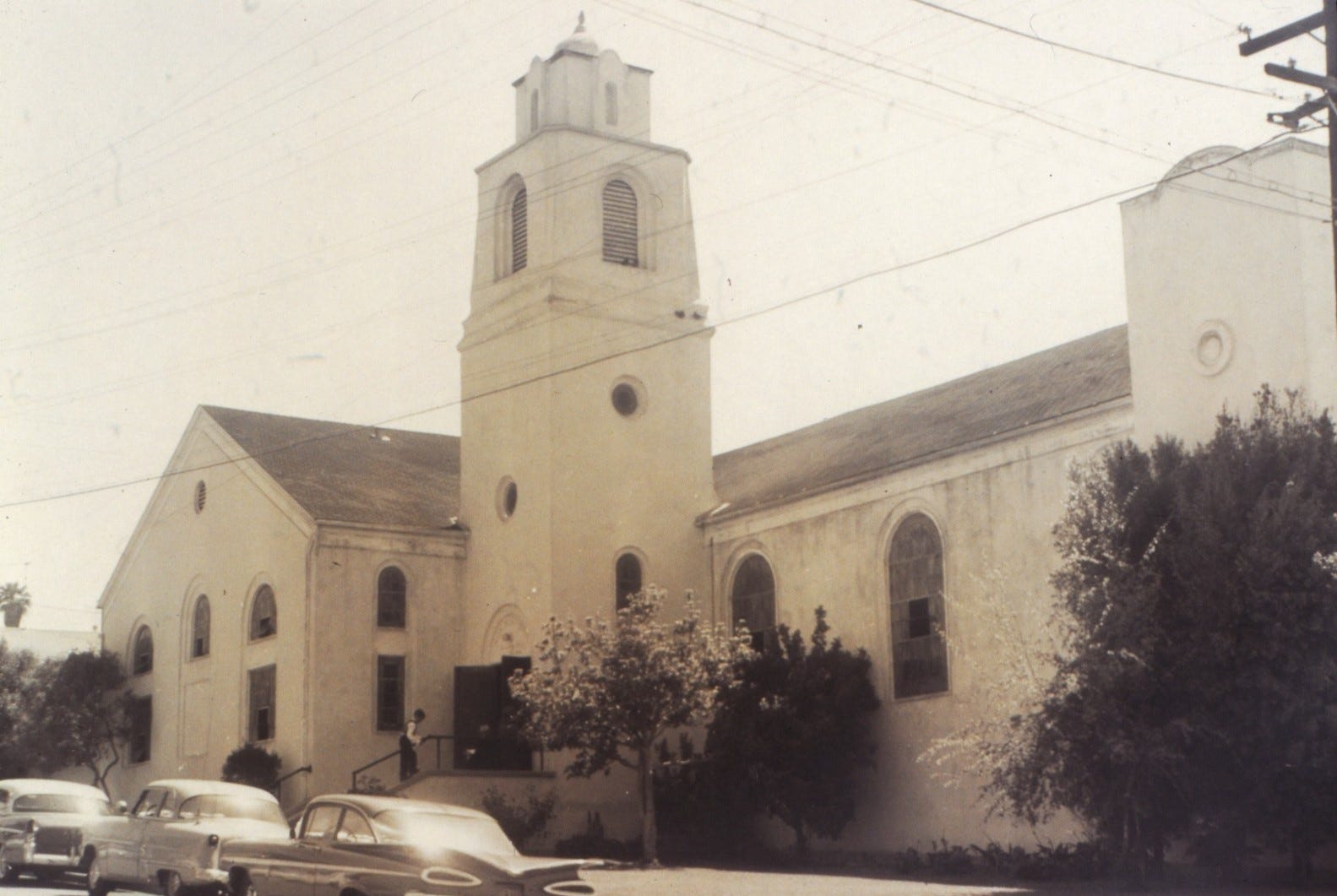
Being at some distance from the center of Zion gives local branches more freedom to build than might be permitted closer to LDS Church headquarters. While the 1913 Los Angeles (Adams) Branch Chapel shows its Utah roots, the Ocean Park Chapel with stucco walls, a scalloped Spanish Baroque gable, and a domed tower, emphasizes its California setting. It is the first of many LDS California meetinghouses to draw on the popular Spanish Colonial style.
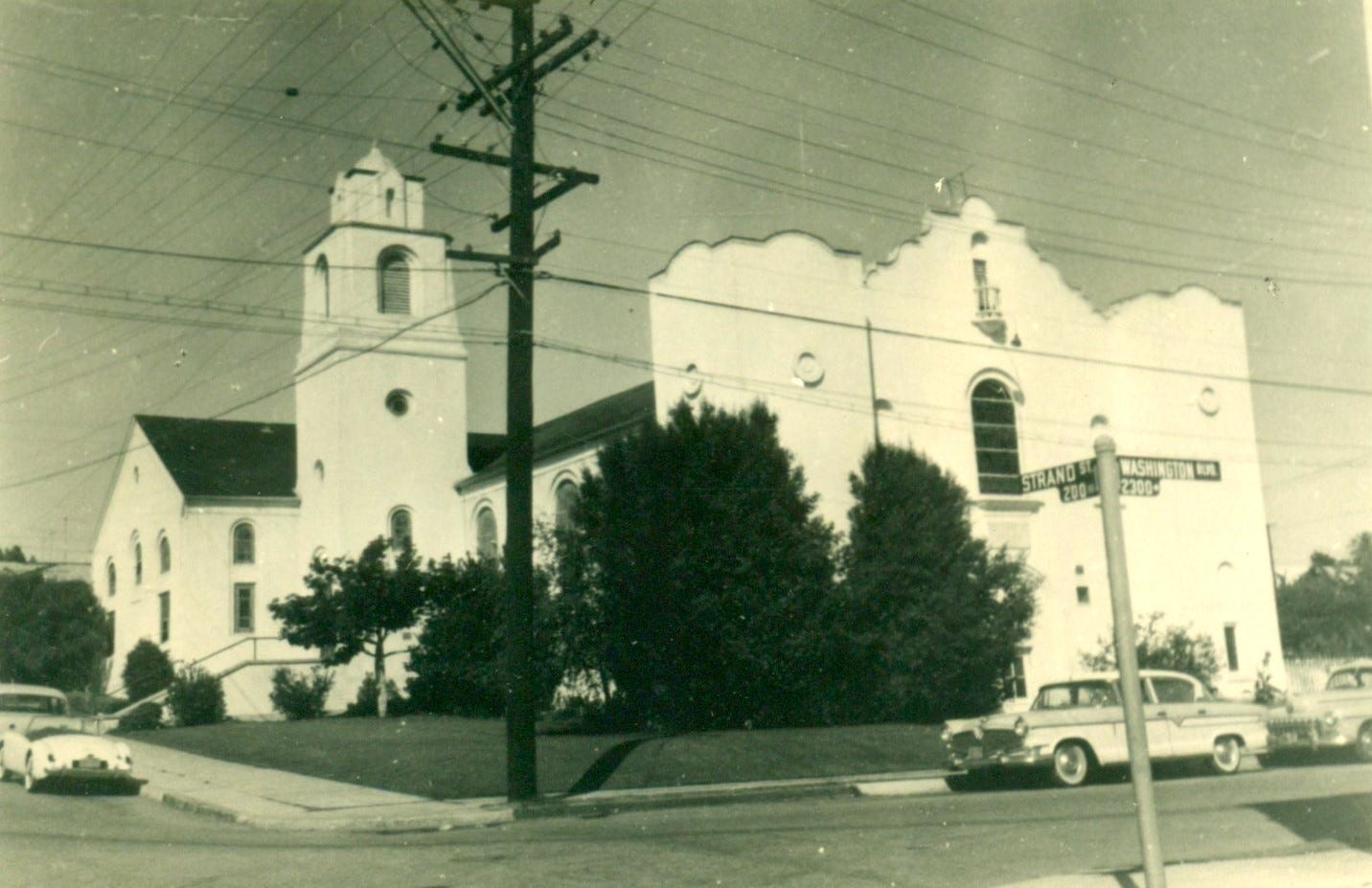
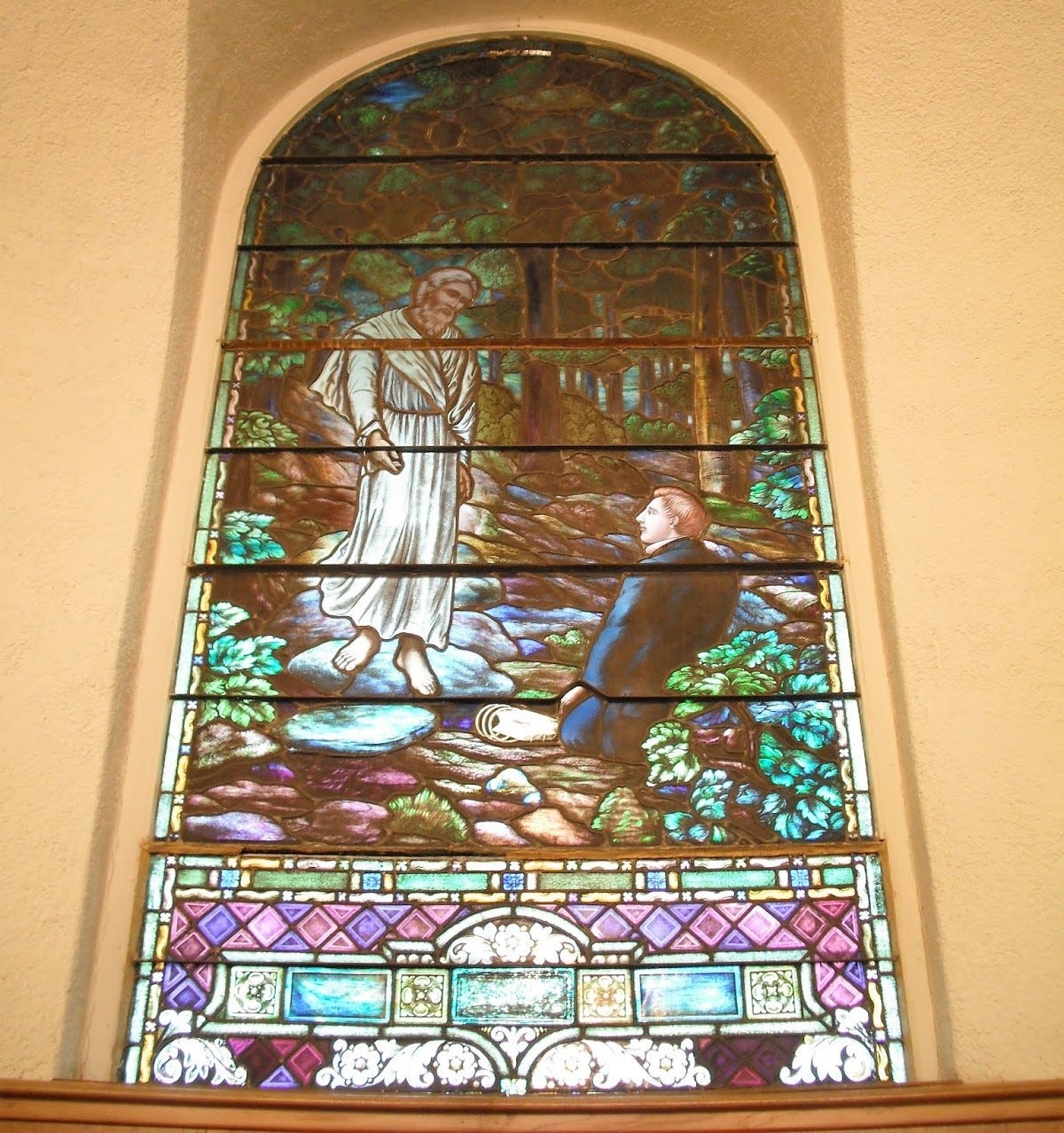
The Spanish theme continues inside with an apse behind the rostrum and decorative niches on either side of the paintings above. In the front chapel, a stained glass window of Moroni and Joseph Smith proclaims Mormon identity.
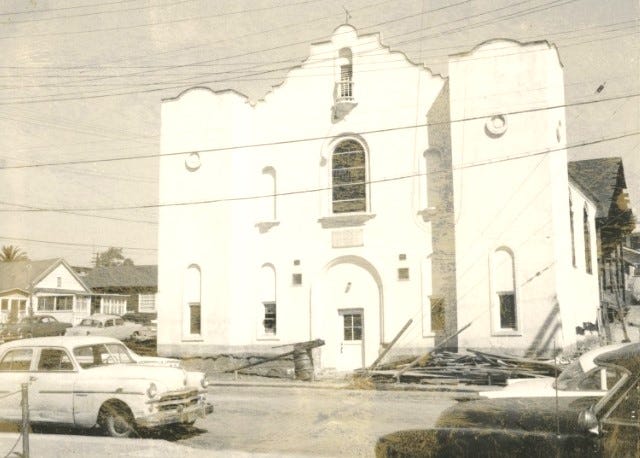
Construction (architect Rutherford is also the builder) of the Ocean Park chapel begins in April 1922. The cost to build is $41,600, with local LDS Church members contributing $12,000 and most of the labor.
Only 7 months elapse from the lot purchase until the Ocean Park Chapel is dedicated on September 24, 1922, by the new LDS Church president Heber Jeddy Grant (1856 – 1945). More than a thousand people are in attendance - the largest gathering of LDS Church members in California up to that time.
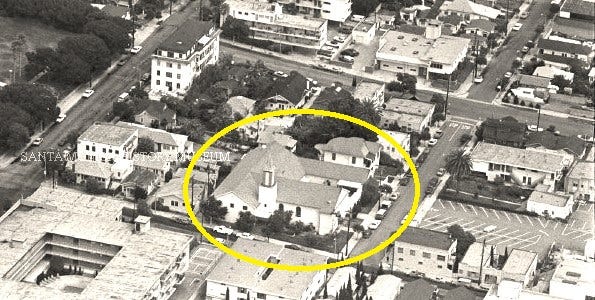
[1922] LDS in Ocean Park
In September 1922, the new head of the LDS Church in Los Angeles County, George W. McCune (1872 – 1963), moves from New York to Santa Monica. McCune also becomes president of the LDS Church Ocean Park Branch. LDS Church membership grows rapidly over the next 2 years.7
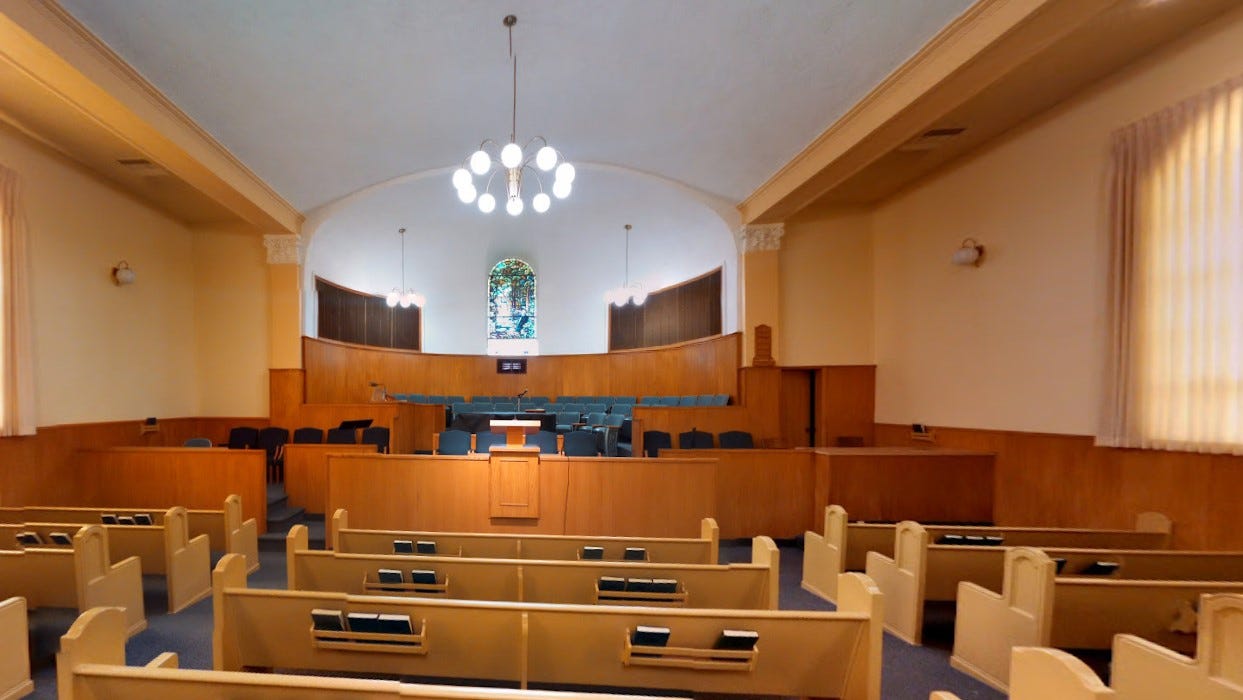
In 1923, LDS Church president Heber J. Grant presides over the organization of the LDS Los Angeles Stake - the first stake in a major urban area outside of the intermountain region. LDS Church leaders are astonished at the exploding LDS population in the city. All three of the Los Angeles Stake’s meeting houses are filled to overflowing, with 1,200 people crowded into the new Ocean Park Chapel, built to accommodate 300.
[1960] Remodel and Expansion
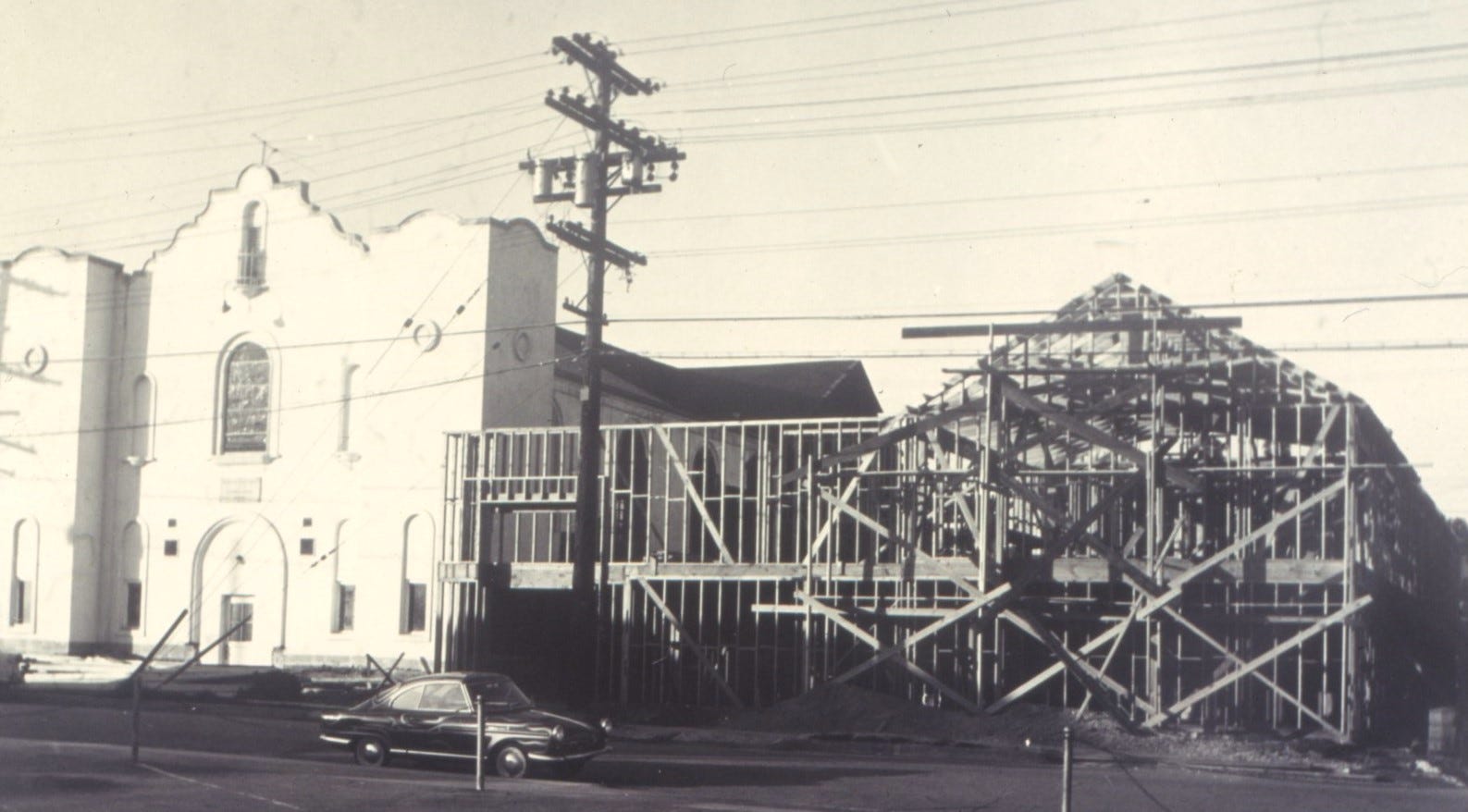
By 1960 the LDS Church building program becomes more rigorously standardized, and LDS buildings in California become indistinguishable from the meeting houses of the rest of the country. The Ocean Park branch chapel remodel and expansion,8 which begins around 1960 and is completed about 1963, is probably under the direction of LDS Church architect Harold W. Burton (1887 – 1969).
Updates
In August 2026, the LDS Church moves out of the Ocean Park branch chapel.
An LDS ward consists of a minimum number of church members, typically 200 to 500 active church members within an area that is within a reasonable travel time of the meetinghouse. If there are not enough church members to exist as a ward, then the congregation is referred to as a branch. Several wards make up a stake, which is similar to a Catholic diocese. To be created, a stake must be composed of at least five contiguous wards.
LDS president Joseph Fielding Smith has been visiting Ocean Park (156 Hart) for his health for several years. In 1913, he purchases a lot on the SWC 21st & Georgina (304 21 St) in Gillette's Regent Square. The building permit is for a $7,500 10-room house. Joseph F. Smith dies in 1918, and his son Elias Wesley Smith (1886 – 1970), who occupies the house, leaves to head up the LDS Church in Hawaii in 1919.
The LDS Church buys Lots 5, 6 and 7 of the South Santa Monica Wharf Property - (Los Angeles County Assessor APN 4289-015-013.)
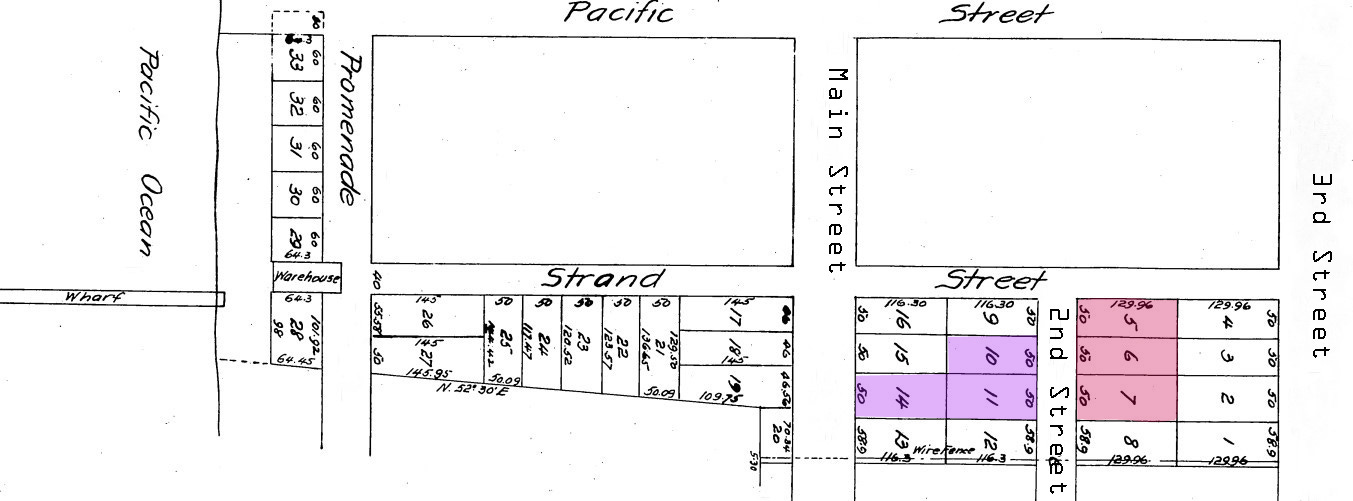
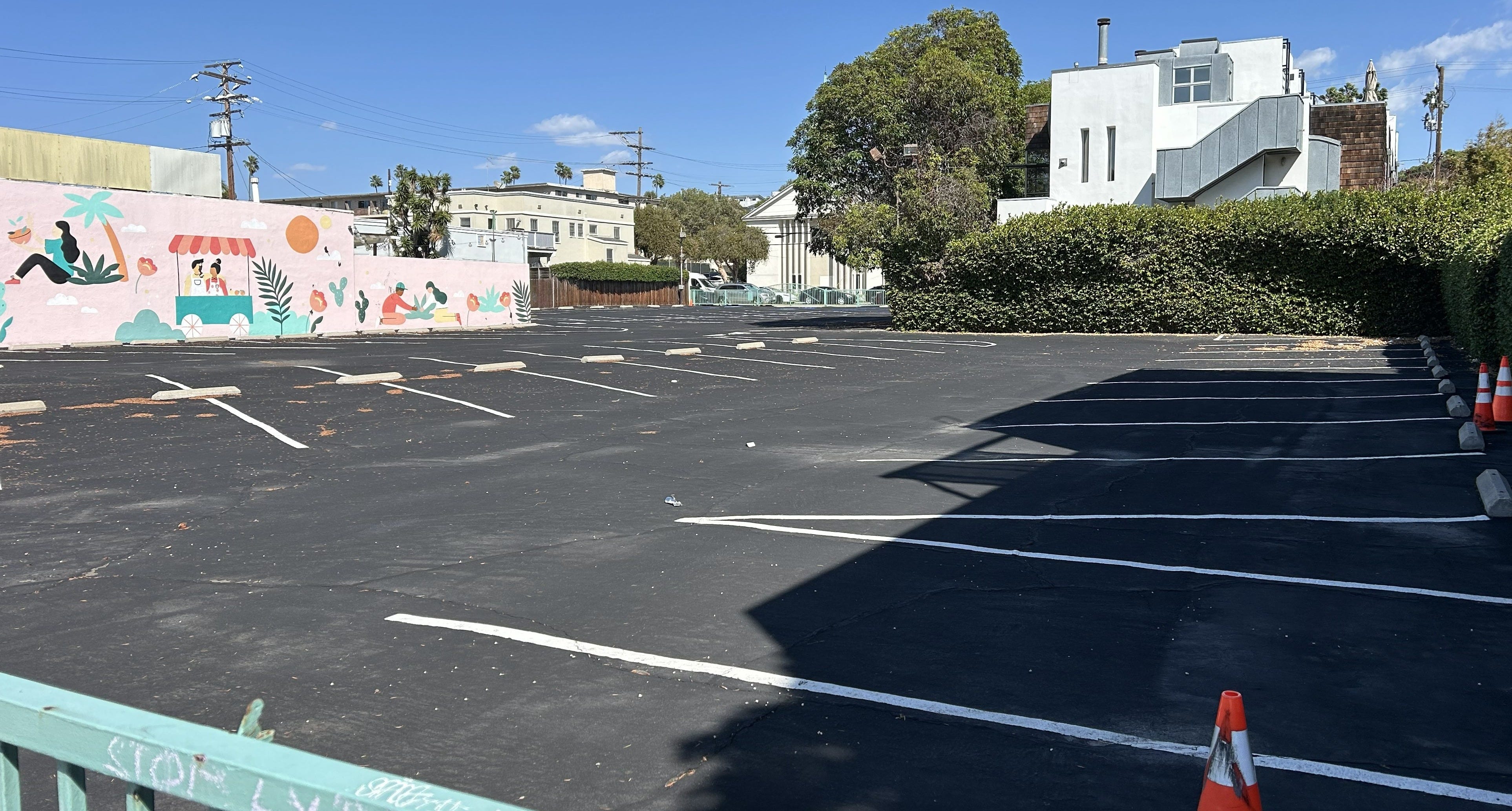
The LDS Church also owns the 16,700 sq-ft parking lot (Lots 10, 11 and 14 of South Santa Monica Wharf Property) at 2311 Main St (APN 4289-015-038).
From 1886 to 1917, 2nd St is named Lake St, and then from 1917 to 1970 is named Washington Blvd.
In February 1922, the Ocean Park Masonic Lodge informs the LDS Church that it may no longer use the Marine St Masonic Lodge facilities. For a few months until the Ocean Park Chapel is completed, LDS Church members meet at the Odd Fellows Hall (1431 3rd St).
Francis David Rutherford (1883 - 1933) is born in Salt Lake City and educated at the University of Utah. He does not begin to apprentice as an architectural draftsman until 1906. From 1907 to 1910, Rutherford and architect Ramm Hansen form the firm of Rutherford & Hansen. Rutherford practices independently from 1911 to 1918. In 1919, Rutherford enters into another partnership under the name Rutherford & Ashton. In Utah, his professional reputation is based upon public school design, including such Salt Lake area schools as Douglas and Uintah Elementary Schools, and Roosevelt Junior High School.
Around 1921, Rutherford moves to Santa Monica, where he establishes an architectural practice. Rutherford’s architectural work in California primarily involves institutional projects, including a number of primary and secondary schools as well as several university buildings. Examples of his work include the Martha Washington School in Venice, two junior high schools in Burbank, and several buildings for Santa Monica Junior College. He dies in Santa Monica in 1933.
In the early 1920s, a desire for an LDS temple in Los Angeles County is expressed, and LDS Church leaders in Salt Lake City investigate the possibilities. In 1920, Harry Culver (1880 - 1946), developer of Culver City, offers the LDS Church a 6-acre tract. After consideration, Salt Lake City feels that building a temple would only increase what is seen as an already alarming migration from Utah to California.
The LDS Los Angeles Temple in Westwood opens in 1956.
The LDS Church owns 3 lots on the southeast of 2nd Street and Strand Street.